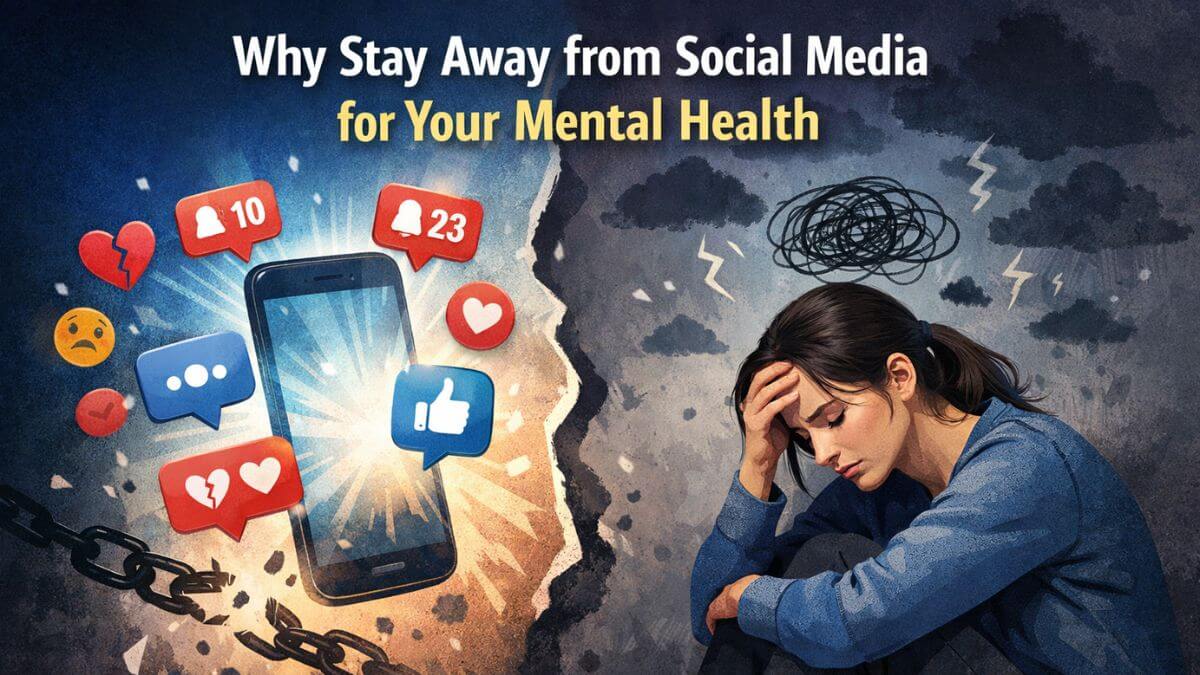
Why stay away from social media for your mental health
Scrolling through social media often feels harmless, yet mounting evidence suggests a different reality for mental well-being. Research from the Royal Society for Public Health links heavy social media use with increased anxiety, sleep disruption, and reduced self-esteem, particularly among adults under 40. Constant comparison, algorithm-driven outrage, and the pressure to remain visible can quietly erode emotional stability.
Recent studies from 2025 and 2026 show that too much social media harms our mental health. A one-week break can drop anxiety by 16%, depression by 25%, and sleep problems by 15% in young adults. Many people feel better, sleep more deeply, and enjoy real life more when they step away.
This article explains why staying away from social media can protect mental health, improve focus, and restore a healthier relationship with time, self-worth, and real-world connections without completely disconnecting from modern life.
1. It Triggers Constant Comparison and Lowers Self-Esteem
Social media shows only the best parts of life—perfect vacations, filtered faces, fancy cars, and happy families. When you see these, it’s easy to think, “Why isn’t my life like that?” This comparison makes you feel less worthy, less attractive, or less successful.
Studies show heavy use leads to more body dissatisfaction, especially for women and teens. In 2025 reports, constant scrolling is linked to lower self-esteem and feelings of not being good enough. Stepping away helps you focus on your own wins and feel happier with what you have.
2. It Fuels Anxiety and Fear of Missing Out (FOMO)
You open the app and see friends at parties, trips, or events you weren’t invited to. That FOMO hits hard—fear that everyone is having fun without you. It creates worry and restlessness.
Research from recent years links more than 3 hours of daily use to higher anxiety. One 2025 study found that people who cut back felt calmer and less stressed. Without the endless feed, your mind relaxes—no more wondering what others are doing.
3. It Worsens Depression Symptoms
The more time on social media, the higher the chance of feeling sad or hopeless. Passive scrolling (just looking, not posting) is worse—it makes you feel isolated even when connected.
A big 2025 JAMA study showed a one-week detox reduced depression symptoms by nearly 25%. Many users report mood lifts when they quit or limit use. Social media can make depression feel worse by showing “perfect” lives while hiding real struggles.
4. It Disrupts Sleep and Makes You Tired All Day
Scrolling at night keeps your brain active. The blue light tricks your body into thinking it’s daytime, and exciting videos release dopamine (a feel-good chemical), making it hard to stop.
Studies link bedtime social media to shorter sleep, insomnia, and poor rest. In 2025–2026 data, heavy users wake up tired and moody. Better sleep comes fast when you keep your phone out of the bedroom—your energy and mood improve quickly.
5. It Creates Addiction Through Dopamine Hits
Social media is built like a game: likes, comments, and new posts give quick dopamine rewards. This makes you check again and again, even when you don’t want to.
Experts call it “digital dopamine”—similar to how gambling or junk food hooks you. In 2026 stats, millions (over 210 million globally) show signs of addiction. Breaking free reduces cravings, frees your time, and lets your brain reset for real joys like family time or hobbies.
6. It Increases Feelings of Loneliness and Isolation
You might have 1,000 “friends” online, but real talks happen less. Passive use (just watching) makes you feel more alone, not connected.
Surprising studies show that high social media time links to higher loneliness. Even though platforms promise connection, they often leave you feeling empty. Real face-to-face chats with family or friends in Ludhiana feel warmer and more fulfilling.
7. It Exposes You to Cyberbullying and Negativity
Mean comments, trolls, or hate messages hurt deeply. Cyberbullying hits hard, especially for teens and young women, leading to anxiety, depression, or worse.
Many studies from recent years link online aggression to mental health drops. Staying away protects your peace—no more reading hurtful words or arguments in groups.
8. It Wastes Time and Steals Productivity
Ordinary people spend 2+ hours daily on social media. That adds up to weeks every year! Time lost scrolling could go to exercise, reading, learning skills, or spending time with loved ones.
When you quit or limit it, you get hours back. Many people feel more focused, achieve goals faster, and enjoy simple things more—like evening walks or home-cooked meals.
How to Avoid Spending Time on Social Media
You may take steps to reduce the negative effect social media has on your psyche.
As a first step, restrict your activities. Set a daily social media usage goal and stick to it. Consider using a timer or app to keep track of your work sessions.
Second, keep up with your other interests and commitments. Make sure you don’t let your addiction to social media control you. Ensure that you are still engaging in pleasurable activities, connecting with loved ones, and enjoying some fresh air and exercise.
Third, pay attention to how you feel after using social media. Try separating yourself from it for a while if you feel that it’s triggering excessive worry or low mood. In fact, taking a break from social media may be beneficial to your psychological well-being.
There is support available for those who suffer from mental health issues such as anxiety, depression, and loneliness. If you are having problems maintaining your mental health, talk to your doctor or a mental health expert.
Conclusion
You don’t have to delete everything forever. Start small: no phone for the first hour after waking, no scrolling at night, or one day off per week. Apps like screen-time trackers help set limits.
Your mental health matters more than likes or views. Choose real life, real connections, and real peace.
What do you think? Have you taken a break from social media? Share in the comments—your story might help someone else!