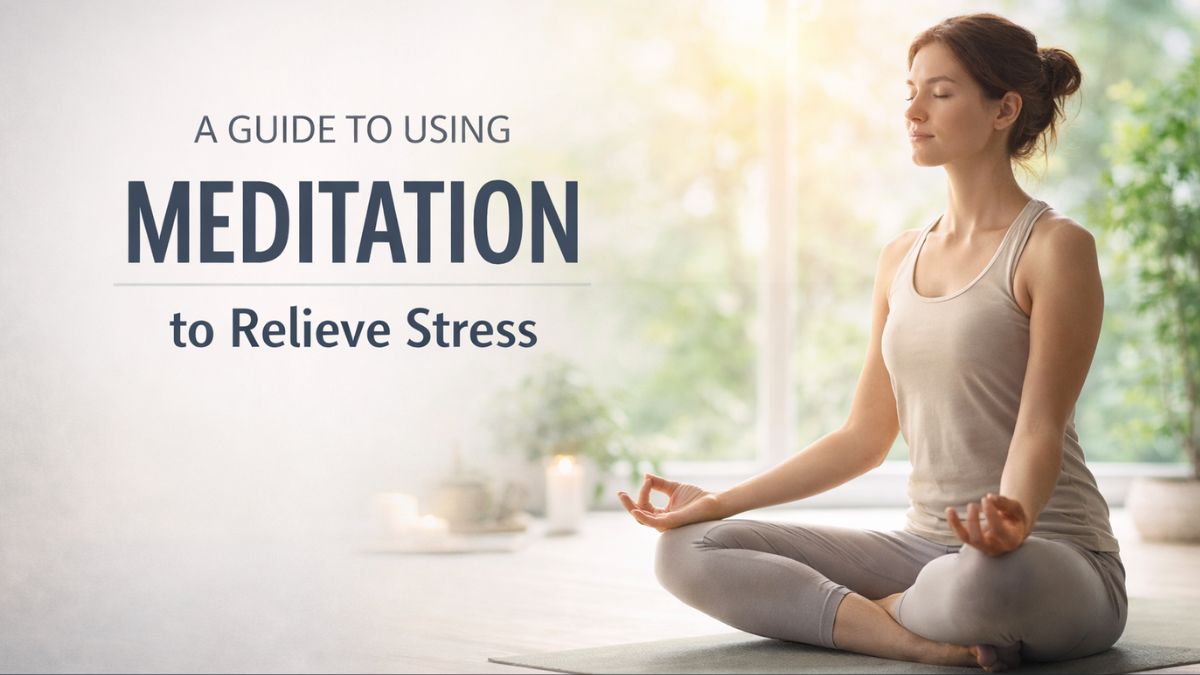
A guide to using meditation to relieve stress
Stress has turned into the main characteristic that defines contemporary living because it disrupts both mental focus and sleep patterns, and emotional control and bodily well-being. Stress serves as a primary factor for non-communicable diseases according to the World Health Organization, yet UK and Australian surveys reveal that 70% of adults experience regular stress. Meditation has emerged as a scientific approach to stress reduction, which replaces its previous role as a spiritual luxury in response to current circumstances.
The guide provides information about meditation techniques and their stress relief benefits, and practical methods to incorporate them into everyday life.
Understanding stress and the body’s response
Stress activates the body’s sympathetic nervous system, triggering the release of cortisol and adrenaline. This response improves short-term alertness but becomes harmful when prolonged. Chronic stress has been linked to hypertension, weakened immunity, anxiety disorders, and impaired cognitive performance. Research published in The Lancet Psychiatry highlights that persistent stress also alters brain regions associated with memory and emotional control.
Meditation interrupts this cycle by stimulating the parasympathetic nervous system, which governs rest and recovery. Through controlled attention and breathing, meditation reduces cortisol levels and lowers heart rate, allowing the body to return to a balanced physiological state.
What meditation actually involves
Meditation refers to a set of mental practices that train attention and awareness. Contrary to common assumptions, it does not require suppressing thoughts or achieving mental emptiness. The practice focuses on observing thoughts without judgment and returning attention to a chosen anchor, such as the breath or bodily sensations.
Scientific studies from institutions such as Harvard Medical School show that regular meditation can lead to measurable changes in brain structure, including increased grey matter density in areas linked to emotional regulation. These neurological changes explain why meditation supports long-term stress resilience rather than offering temporary relief alone.
How does meditation reduce stress at a psychological level?
Stress often arises from rumination, anticipation, and perceived lack of control. Meditation directly addresses these cognitive patterns. By cultivating present-moment awareness, individuals reduce mental engagement with past regrets and future worries. A meta-analysis in JAMA Internal Medicine found that mindfulness-based meditation programmes significantly reduced symptoms of anxiety and stress across diverse populations.
Meditation also improves emotional literacy. Practitioners become more aware of early stress signals, such as muscle tension or shallow breathing, and respond before stress escalates. This skill proves particularly valuable in high-pressure work and academic environments.

Types of meditation effective for stress relief
Mindfulness meditation remains the most widely researched method for stress reduction. It involves sustained attention on the present moment, typically through breathing. This approach suits beginners because it requires minimal instruction and adapts well to daily routines.
Breathing-focused meditation emphasises slow, diaphragmatic breathing. Studies indicate that breathing at a rate of six breaths per minute optimises heart rate variability, a key marker of stress resilience.
Body scan meditation directs attention systematically through the body, identifying and releasing tension. This method benefits individuals who experience stress somatically, such as through headaches or back pain.
Guided meditation, delivered through audio or video instruction, supports consistency and structure. Clinical trials show that guided sessions improve adherence, particularly among those new to meditation.
How to start meditating for stress relief
Successful meditation depends on consistency rather than duration. Beginners benefit from sessions lasting five to ten minutes, gradually increasing as comfort develops. Selecting a quiet environment reduces external distractions, but complete silence is not essential.
Posture plays a functional role. Sitting upright with a relaxed spine supports alertness, while lying down may encourage sleep. Attention should rest gently on the breath, observing its natural rhythm rather than controlling it. When the mind wanders, attention returns to the breath without self-criticism. This redirection forms the core of the practice.
Establishing a regular time, such as early morning or before sleep, strengthens habit formation. Behavioural psychology research confirms that routine cues increase long-term adherence to stress management practices.
Integrating meditation into daily life
Meditation need not remain confined to formal sessions. Informal mindfulness during routine activities enhances stress regulation throughout the day. Conscious breathing during commutes, mindful eating, and brief pauses between tasks reduce cumulative stress load.
Workplace studies show that employees who practise brief mindfulness exercises report improved focus and lower perceived stress. Even one-minute breathing resets before meetings can influence emotional tone and decision-making quality.
Technology can support integration. Mobile meditation applications provide reminders and structured programmes, though their effectiveness depends on regular use rather than features alone.
Common challenges and realistic expectations
Many beginners abandon meditation due to unrealistic expectations. Discomfort, restlessness, and intrusive thoughts reflect normal cognitive activity, not failure. Stress reduction emerges gradually through repeated practice.
Consistency outweighs intensity. A five-minute daily practice produces more measurable benefits than sporadic longer sessions. Clinical trials demonstrate significant stress reduction after eight weeks of regular meditation, suggesting that patience plays a critical role.
Individuals with severe anxiety or trauma histories may experience heightened awareness initially. In such cases, professional guidance from trained practitioners or clinicians ensures safe and effective practice.
Scientific evidence supporting meditation for stress
Neuroimaging studies reveal that meditation reduces activity in the amygdala, the brain’s fear-processing centre. Longitudinal research also links meditation to improved immune response and reduced inflammation markers, both associated with chronic stress.
A large-scale review published by the National Institutes of Health reported moderate evidence supporting meditation for stress-related outcomes, including anxiety reduction and improved psychological well-being. These findings reinforce meditation’s role as a complementary, non-pharmacological intervention.
Meditation and long-term stress resilience
Meditation does not eliminate stressors, but it changes the relationship individuals have with them. By improving attention control and emotional regulation, meditation increases adaptive coping capacity. This shift proves particularly relevant in environments characterised by uncertainty and high cognitive demand.
Over time, practitioners report improved sleep quality, enhanced concentration, and greater emotional stability. These outcomes contribute indirectly to stress reduction by strengthening overall mental health.
Frequently asked questions about meditation for stress
How long does meditation take to reduce stress?
Most studies observe measurable changes within six to eight weeks of consistent practice, though some individuals notice short-term relaxation benefits after initial sessions.
Is meditation suitable for everyone?
Meditation suits most people, but those with severe mental health conditions should seek professional advice before starting structured programmes.
Can meditation replace medical treatment for stress?
Meditation complements medical and psychological interventions but does not substitute professional care when stress leads to clinical conditions.
Does meditation require spiritual beliefs?
Meditation functions as a cognitive and physiological practice and does not depend on religious or spiritual frameworks.
Final reflections on meditation as a stress management tool
Meditation offers a structured, accessible method for managing stress through measurable psychological and physiological mechanisms. Its effectiveness rests on regular practice, realistic expectations, and thoughtful integration into daily routines. As stress-related disorders continue to rise globally, meditation stands as a practical response grounded in scientific evidence rather than trend-driven claims. For individuals seeking sustainable stress relief, meditation provides both immediate calming effects and long-term resilience.