5 Simple Exercises for Stay-at-Home Mums
Many stay-at-home mums try to balance childcare, household duties, and personal well-being. This demanding routine leaves very little room for structured fitness, yet regular exercise plays a crucial role in sustaining energy, emotional balance, and long-term health.
A study by the American Heart Association reports that even 150 minutes of moderate activity per week reduces the risk of cardiovascular illness by nearly 30%. With such compelling figures, an important question emerges: how can mothers include exercise in their daily flow without disrupting responsibilities?
This article outlines five simple, efficient exercises that support strength, flexibility, and stamina. Each one fits easily into a home routine, requires little to no equipment, and encourages a sustainable approach to personal health.
1. Squats: Building Lower-Body Strength for Daily Demands
Caring for children often involves lifting, bending, carrying groceries, and shifting between tasks. Squats strengthen the quadriceps, hamstrings, and glutes—the major muscle groups that support these movements. Strong legs help mothers reduce strain on the lower back and maintain better posture throughout a long day.
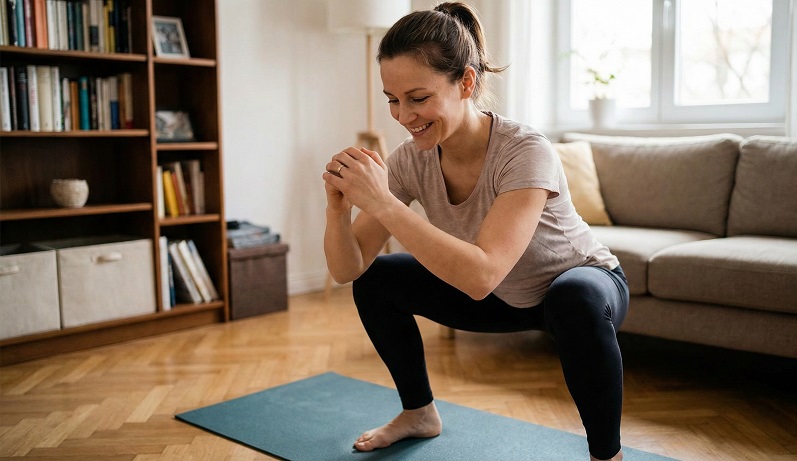
Performing squats at home needs only a few minutes and a small space. Standing with feet shoulder-width apart, lowering the body while keeping the chest lifted, and rising with control creates an effective cycle. Consistency matters more than intensity, and even three sets of ten repetitions can improve balance and strength within a few weeks.
A study from the National Institute on Aging found that women who engaged in regular lower-body strength training reported a 20% improvement in daily mobility over twelve weeks. This improvement translates into more comfortable movement, reduced fatigue, and better support during activities such as lifting toddlers or managing household chores.
Squats also adapt easily to progression. Once a mother feels confident, she can add variations like pulse squats or sumo squats to challenge different muscles. The exercise grows with her capabilities, ensuring steady improvement without overwhelming her routine.
2. Modified Push-Ups: Strengthening the Upper Body and Core
Upper-body strength becomes essential when mothers carry babies, lift strollers, or manage daily household tasks. Modified push-ups, performed from the knees instead of the toes, offer a practical and accessible way to build shoulder, chest, and tricep strength without intimidating beginners.
Beginning in a plank position with knees on the ground, lowering the chest toward the floor, and pushing upward engages the target muscles while reducing strain. This movement also contracts the core, offering additional stability benefits. Over time, stronger arms help reduce discomfort from repetitive lifting and holding activities, which many new mothers experience.
According to research from the Journal of Strength and Conditioning, participants who practised push-up variations three times a week increased upper-body endurance by 36% within eight weeks. For a stay-at-home mum juggling physical commitments throughout the day, this improvement offers practical benefits.
Modified push-ups also encourage confidence. As strength increases, mothers can transition to traditional push-ups or include incline push-ups using kitchen counters or sturdy tables. Such progressions maintain motivation and help the routine remain engaging.
Related Articles: 5 Super Simple Exercise Tips For a Better Life
3. Glute Bridges: Supporting Posture and Reducing Back Discomfort
Many mothers experience back discomfort due to long hours of sitting while feeding, bending during playtime, or carrying toddlers. Glute bridges strengthen the posterior chain, which includes the glutes and lower back muscles. These muscles stabilise the spine and support healthy posture.
To perform a glute bridge, lie on your back with knees bent, lifting the hips toward the ceiling, and lowering with control activates the target muscles. This exercise improves pelvic stability and helps counterbalance strain from daily activities. The movement suits beginners yet offers impressive benefits.
A physiotherapy study showed that women who included glute bridges in their weekly routine reported a 40% reduction in lower-back tension after six weeks. Such results highlight the value of strengthening muscles that often remain neglected during everyday responsibilities.
This exercise also works well when mothers incorporate it into quiet moments. It can be done while the baby naps or while supervising children playing on the floor. Progressions, such as single-leg bridges, enhance challenge once the foundational movement feels comfortable.
4. Standing Knee Raises: Improving Core Stability and Cardiovascular Health
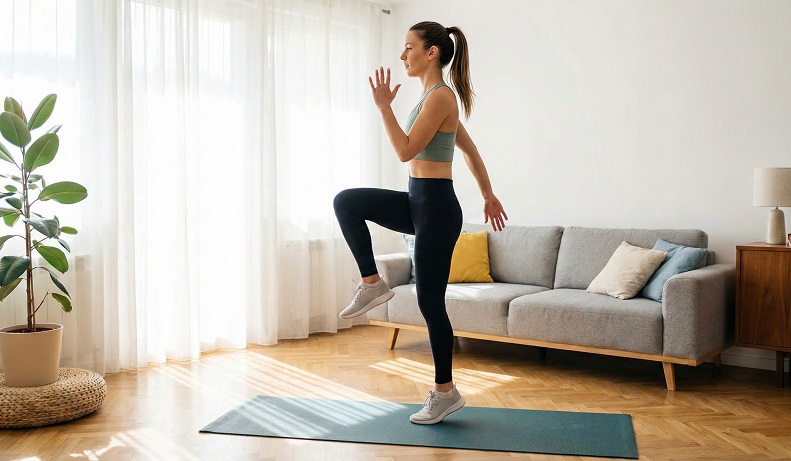
Many mothers hope to improve core strength without lying on the floor, especially when toddlers interrupt the space frequently. Standing knee raises offer a practical solution. This movement targets the abdominal muscles while allowing a slight increase in heart rate, supporting cardiovascular health.
Starting from a tall standing position, lifting one knee toward the chest while engaging the core, then alternating sides, creates a rhythmic pattern. The movement supports coordination and encourages controlled breathing. Over several minutes, it transforms into a light aerobic exercise.
Cardiovascular health often suffers when mothers spend long hours indoors with limited opportunities for movement. A World Health Organization report notes that 31% of adults globally fail to meet activity guidelines, contributing to fatigue and reduced metabolic function. Short bursts of standing knee raises help counter these risks without requiring extended workout sessions.
Mothers can incorporate this exercise while cooking, watching their children, or managing household tasks. The accessibility of the movement makes it easier to repeat throughout the day, leading to meaningful improvements in core stability and endurance.
5. Child-Friendly Yoga Poses: Enhancing Flexibility and Emotional Well-Being
Flexibility supports comfortable movement, injury prevention, and reduced tension. Yoga offers a calming way to stretch the body while improving focus. For stay-at-home mums, yoga becomes even more appealing because many poses can include children.
Simple poses such as Cat-Cow, Child’s Pose, and Standing Forward Fold help loosen tight muscles and encourage deeper breathing. These movements support mental clarity and emotional regulation—benefits many mothers welcome in a busy home environment. Yoga also lowers cortisol levels, according to a study by Harvard Medical School, which helps reduce stress.
Integrating children into yoga sessions transforms the routine into bonding time rather than a separate chore. Toddlers enjoy mimicking movements, and older children appreciate the chance to participate. This shared activity encourages a positive relationship with physical wellness across the family.
Yoga’s adaptability ensures that mothers can practise for five minutes or twenty, depending on the day’s demands. Such flexibility supports consistency, which is vital for long-term health.
Conclusion
Stay-at-home mums face unique physical and emotional demands, yet they can build strong, healthy routines with short, effective exercises. Squats strengthen the lower body for everyday tasks. Modified push-ups support the arms and core. Glute bridges enhance spinal stability. Standing knee raises offer a practical combination of core work and light aerobic activity. Child-friendly yoga adds flexibility and emotional grounding while including family members.
These exercises do not require expensive equipment or elaborate planning. Instead, they invite mothers to claim small pockets of time for their well-being. As each week passes, strength increases, energy improves, and confidence grows. The question to ask now is simple: which exercise will you begin with today?